
AAI 2026: AMD Unveils Next-Generation AI Infrastructure and Computing Portfolio

At Advancing AI (AAI) 2026, AMD introduced its most comprehensive AI computing portfolio to date, headlined by the AMD Helios rack-scale AI solution alongside new 6th Gen AMD EPYC processors, AMD Instinct MI400 Series GPUs, Ryzen AI Embedded X100 processors, and Kria AI robotics platforms.
The launch reflects AMD’s strategy to provide a complete AI ecosystem spanning data centres, enterprise computing, edge devices and robotics as demand for agentic AI and inference workloads continues to grow.
AMD Helios Leads Next-Generation AI Infrastructure
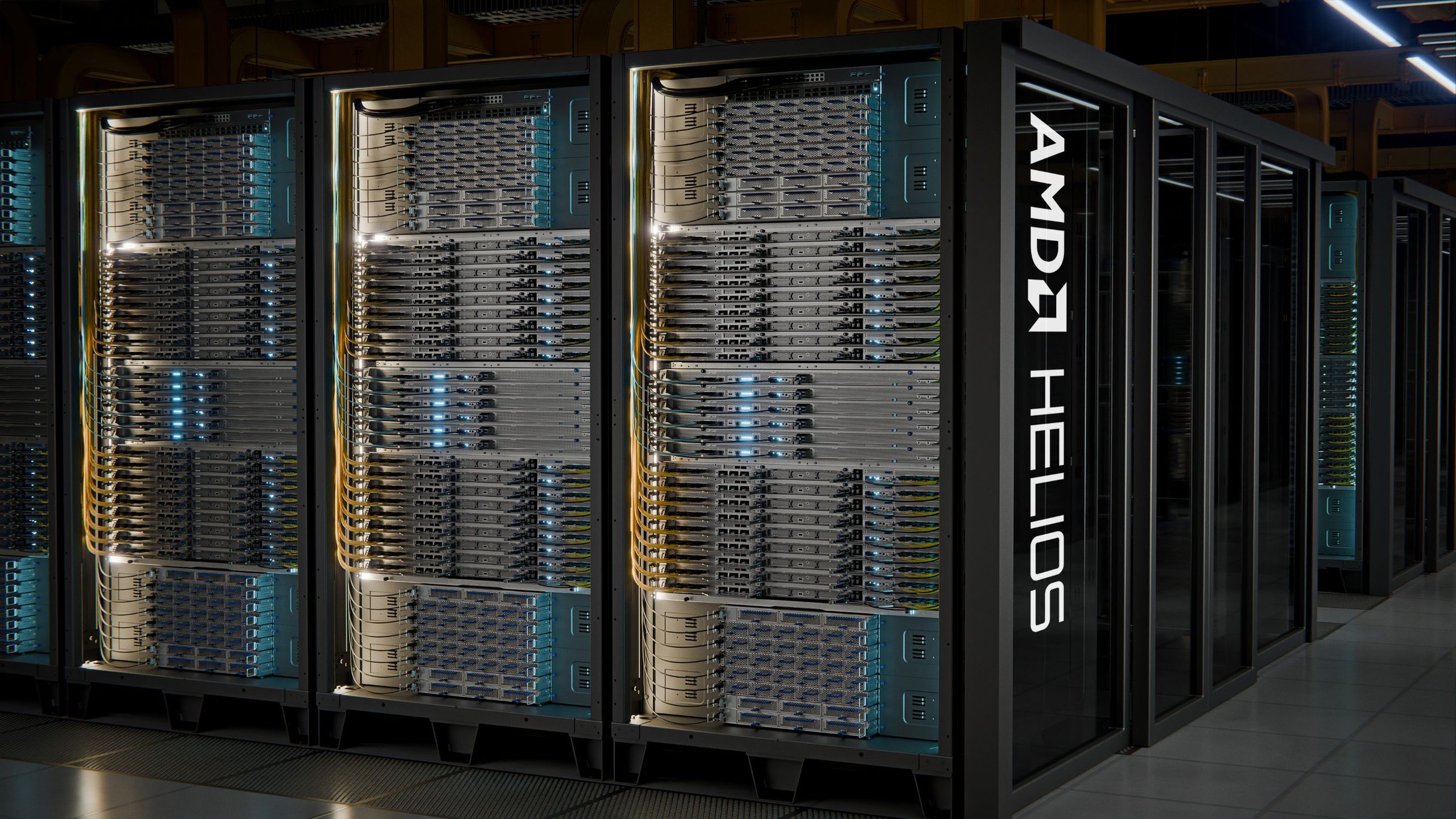
The new AMD Helios rack-scale platform combines 72 AMD Instinct MI455X GPUs, 18 sixth-generation AMD EPYC “Venice” CPUs, Pensando networking and ROCm software into a fully integrated AI infrastructure. According to AMD, Helios delivers up to 30% more inference tokens per dollar than competing AI rack solutions.
Several major AI companies and cloud providers, including OpenAI, Anthropic, Meta, Microsoft, Oracle, Tensorwave, Vultr and others, have already announced plans to deploy AMD Helios at scale.
New EPYC CPUs and Instinct GPUs
AMD also launched its 6th Gen EPYC processors, designed for AI, cloud, enterprise and high-performance computing workloads. The company says the new CPUs offer higher performance, improved efficiency and greater thread density for AI applications.
The new AMD Instinct MI400 Series GPUs are built for AI training, inference and HPC. AMD claims the flagship MI455X delivers 34 times higher token throughput than the previous MI355X, while the MI430X targets scientific computing with up to 288 TFLOPS FP64 performance.
AMD also introduced the Instinct MI350P GPU, designed to upgrade existing AI infrastructure with improved performance-per-dollar.
AI Software and Future Roadmap
AMD announced ROCm.ai, a new AI-assisted software development platform that helps developers build and optimize GPU applications using popular coding assistants such as Claude, Codex and Cursor.
Looking ahead, AMD confirmed its roadmap through 2030, including:
- Zen 7-based EPYC processors arriving in 2028.
- Zen 8-based EPYC processors planned for 2030.
- Instinct MI500 GPUs launching in 2027.
- Instinct MI600 GPUs scheduled for 2028.
- Next-generation Helios 500 and Helios 600 rack-scale AI platforms.
Expanding AI Beyond the Data Centre
AMD also highlighted new AI solutions for enterprise and robotics, including the Ryzen AI Embedded X100 Series, Kria AI System-on-Modules (SOMs) and the Kria AI Robotics Developer Platform, designed to accelerate the development of autonomous robots and physical AI applications.
During the event, partners including Anthropic, OpenAI, Meta, Cerebras, AT&T and Cisco showcased collaborations with AMD to expand AI infrastructure, enterprise AI deployment and next-generation robotics.
With its latest launches, AMD continues to strengthen its position as a full-stack AI computing provider, delivering open hardware and software platforms for AI workloads ranging from cloud data centres to edge devices and intelligent robotics.