THE RISE OF CONNECTED HOMES IN MALAYSIA SPARKSDIGITAL LIVING REVOLUTION
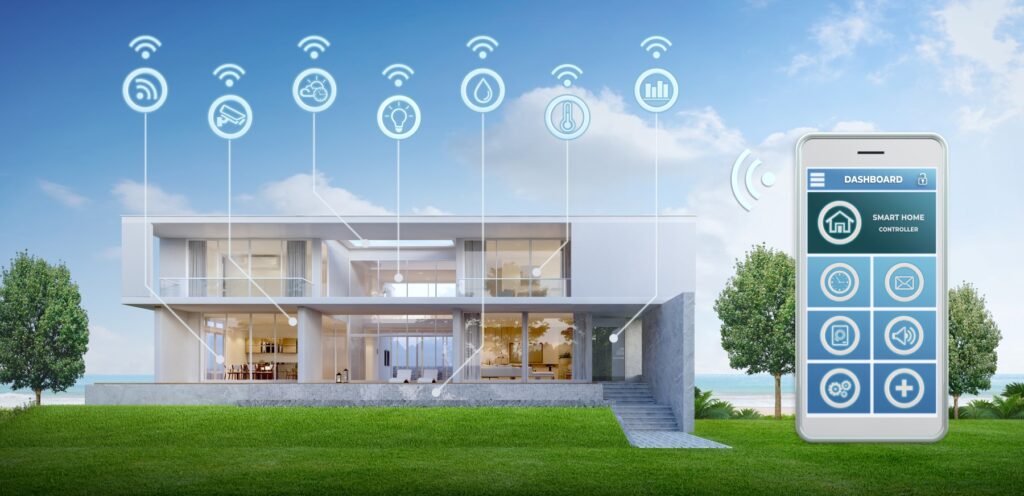
In the time it takes to return home from a day’s work in Klang Valley’s notorious traffic, your living space could already be cool, comfortable and secure – all set in motion with a simple tap on your smartphone. As Southeast Asia embraces digital transformation, Malaysia stands as a pivotal moment in its smart living journey.
Smart homes, once considered luxury, are rapidly becoming an accessible reality for Malaysian households. These connected living spaces enable homeowners to monitor, control, and automate various aspects of their residence remotely – enhancing convenience, security and energy efficiency simultaneously.
What began with simple voice-controlled speakers has evolved into sophisticated ecosystems where everything from air conditioning to security cameras operate in harmony. According to the Malaysian Communications and Multimedia Commission (MCMC), smartphone penetration in Malaysia reached 98.4% in 2023, creating the perfect foundation for smart home control systems that rely on mobile applications.
The Malaysian smart home landscape shows promising growth trajectories. Urban households are increasingly investing in telecommunications and digital connectivity – the essential infrastructure that underpins smart home functionality. With the Malaysian smart home market expected to reach US$411 million by 2025, growing at over 11%, the potential for meaningful integration of technology into everyday living is substantial.

“The Malaysian market presents significant untapped potential in the realm of smart home adoption,” said Justin Choi, Managing Director of LG Malaysia, leading smart life solution company in Malaysia.
“We’re seeing a fundamental shift in how consumers think about their homes – not as collections of separate appliances, but as integrated environments that respond intelligently to their needs. As the country continues to build a more robust digital infrastructure, the readiness for smart homes has never been more promising.”
Malaysia’s public sector has reinforced this progress through key initiatives including the National IoT Strategic Roadmap, the Malaysia Smart City Framework, and the Malaysia Digital Economy Blueprint (MyDIGITAL). The ongoing improvements in Malaysia’s 5G network provide the high-speed, low-latency connectivity that sophisticated smart home systems require to function optimally.
The profile of smart home adopters in Malaysia has evolved beyond tech enthusiasts to include practical homeowners seeking tangible benefits. Today, there’s growing demand from dual-income families seeking time-saving conveniences, security-conscious homeowners, and increasingly, energy-conscious consumers looking to manage rising utility costs.
Malaysia’s tropical climate presents both unique challenges and opportunities in this regard. With year-round high temperatures and humidity levels, climate control represents a significant portion of household energy consumption. Smart cooling systems that adapt to local conditions offer meaningful energy savings while maintaining comfort – particularly appealing as electricity costs continue to rise.
Despite promising growth, challenges remain. While urban centers enjoy robust connectivity, some areas still experience occasional service disruptions. Many consumers express frustration with devices that operate in isolation rather than as part of a cohesive system. This insight has guided forward-thinking manufacturers to move beyond isolated smart devices toward comprehensive smart life solutions that address the specific needs of Malaysian consumers.
AI app platforms are now making it easier for households to take control of their daily routines. Instead of juggling multiple apps for different devices, Malaysians are looking for simpler, more seamless ways to manage their homes.
Solutions such as LG ThinQ show how smart technology can bring everything together in one place — from adjusting the air conditioner after a long commute to checking if the washing machine has finished its cycle. By connecting appliances through a single, intuitive app, homeowners can save time, reduce energy use, and enjoy greater peace of mind
“Consumer preferences have shifted decisively towards integrated digital living. Malaysians are becoming increasingly aware of the advantages of a connected ecosystem that enhances convenience, energy efficiency, and security at home. Powered by LG’s Affectionate Intelligence philosophy, the LG ThinQ ecosystem is designed to understand and ancitipate users’ needs – creating homes that feel more caring, responsive, and effortless. Through the LG ThinQ app, users can seamlessly connect and control their appliances via a single, intuitive interface, saving time, reducing energy usage, and bringing everyday comfort and peace of mind,” Justin Choi elaborated.
This approach reflects the growing consumer demand in Malaysia for smart home solutions that deliver both intelligence and simplicity – where convenience and seamless control through one platform are key to a truly satisfying connected-living experience.
Companies committed to quality and meaningful integration reflect a deeper understanding of local needs. In focusing on how technology can solve everyday Malaysian challenges – from managing tropical climate conditions to enhancing security during festive seasons when many travel – industry leaders are redefining what smart home solutions can offer beyond mere convenience.
As Malaysia continues its digital transformation journey, smart homes will increasingly serve as the foundation for broader smart community development. With improved infrastructure, wider device availability, and increasingly sophisticated integration platforms, the barriers to entry continue to fall.
The question is no longer whether Malaysia is ready for smart homes, but rather how quickly and comprehensively Malaysian households will embrace the benefits of connected living. As technology continues to evolve in harmony with distinctly Malaysian needs and preferences, the nation’s smart home future appears increasingly bright.


![[Photo 1] Healthier Living_ How AI-Powered Home Appliances Can Support Everyday Wellbeing](https://1side0.net/wp-content/uploads/2026/10/Photo-1-Healthier-Living_-How-AI-Powered-Home-Appliances-Can-Support-Everyday-Wellbeing-300x169.jpg)