Lenovo Expands AI and HPC Infrastructure with New AMD EPYC-Powered ThinkSystem Servers
Lenovo has announced a new range of infrastructure solutions designed to support the growing convergence of artificial intelligence (AI) and high-performance computing (HPC).
The expanded portfolio includes next-generation ThinkSystem servers powered by 6th Gen AMD EPYC 9006 processors, high-performance storage, advanced networking and Lenovo Neptune liquid cooling. The company is also expanding its Hybrid AI services to help organisations deploy and scale increasingly complex AI and scientific workloads.
New Servers Deliver Higher Performance and Efficiency
The latest infrastructure lineup introduces several new ThinkSystem platforms:
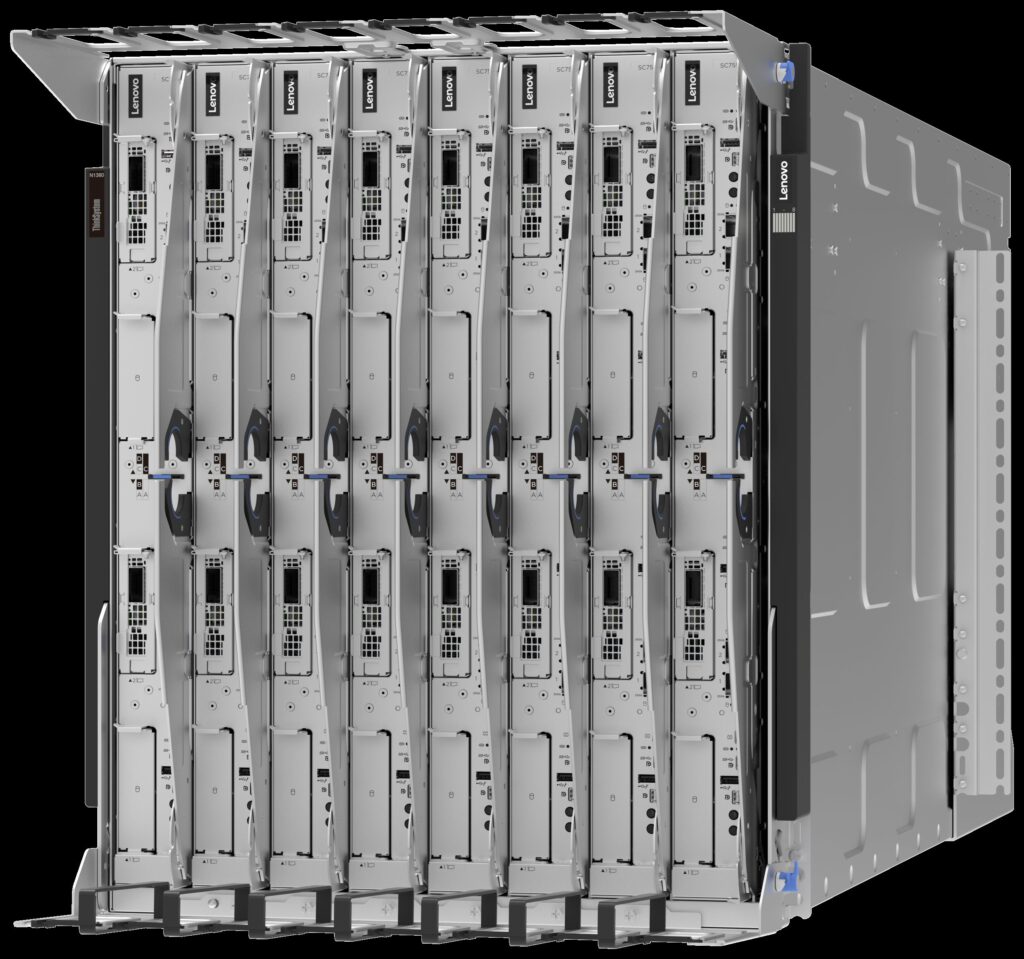
- ThinkSystem SC755: A dual-socket, Neptune liquid-cooled server designed to remove up to 100% of system heat through water cooling. Lenovo claims up to 40% higher sustained performance compared with similar air-cooled systems. It also features Dynamic Partitioning for more flexible compute resource allocation.
- ThinkSystem SR755: Designed for demanding workloads such as engineering, financial modelling, electronic design automation, large-scale virtualisation and agentic AI, with a focus on compute density and memory bandwidth.
- ThinkSystem DE6800 and DE6500: High-performance storage systems optimised for high-throughput and latency-sensitive workloads. The DE6800 targets demanding applications, while the DE6500 offers a more economical option with simplified management.
- Cornelis CN5000 fabric validation: Adds another high-performance interconnect option for data-intensive AI and HPC environments.
Powered by AMD’s latest 6th Gen EPYC server processors, the new platforms are designed to support applications ranging from scientific research and engineering to AI inference and agentic AI.
Expanding AI Factory Services
Beyond hardware, Lenovo is expanding its Hybrid AI Factory services to help organisations configure, deploy and optimise AI infrastructure.
New GPU deployment and optimisation capabilities include multi-node support for Red Hat AI Enterprise, NVIDIA AI Enterprise and NVIDIA Run:ai, giving customers more flexibility when building and managing AI environments.
Lenovo is also expanding its gigafactory services with NVIDIA Infrastructure Services expertise, covering infrastructure planning, deployment, cluster validation and optimisation.
For organisations requiring additional data centre capacity, Lenovo is facilitating access to Digital Realty’s global colocation network. Customers can also use the Digital Realty Innovation Lab to validate infrastructure, applications and workload requirements, with flexible financing options through Lenovo TruScale Infrastructure as a Service.
Supporting AI Research and Creative Workloads
Lenovo highlighted several examples of its infrastructure supporting advanced computing projects worldwide.
At the University of Florida, the fourth-generation HiPerGator supercomputer, built using Lenovo, NVIDIA and AMD technology, delivers 17.49 petaflops of computing performance and processed 33 million research requests over the past year.
Meanwhile, DreamWorks Animation uses Lenovo Neptune liquid-cooled servers in its data centre, achieving up to 20% greater performance and faster rendering to support creative production.
With its latest ThinkSystem hardware, advanced cooling technology and expanded AI services, Lenovo aims to help businesses and research institutions build more efficient, scalable infrastructure for the next generation of AI and high-performance computing.
More information is available at Lenovo’s HPC solutions website.