
Inside ASUS’ Vision for AI Laptops: An Exclusive Interview
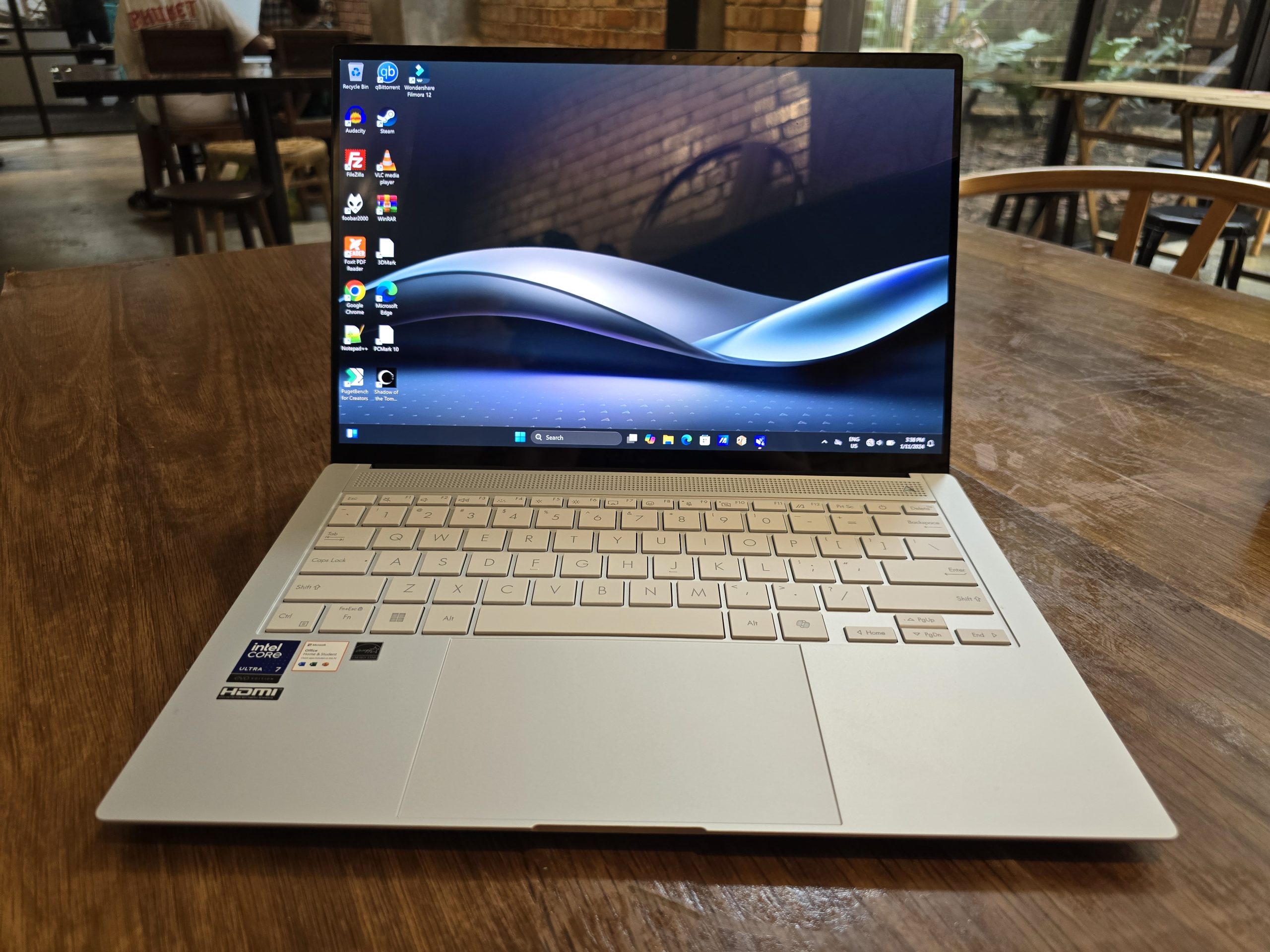
From Premium Materials to On-Device AI: ASUS Shares Its Roadmap for the Future of Zenbook & Vivobook
I recently had the opportunity to sit down with ASUS Malaysia’s Business Development Manager, Huaipin Li, to dive deeper into ASUS’ direction for its next generation of laptops. As the industry enters a new era driven heavily by artificial intelligence, ASUS is positioning itself at the forefront with a clear focus on user experience, premium engineering, and meaningful AI integration.

In this exclusive interview, Huaipin Li shares insights into the evolution of the Zenbook and Vivobook S series, how premium features trickle down to more accessible models, the company’s approach to upgradeability, the philosophy behind ASUS’ pricing, and what consumers can expect as AI continues to redefine personal computing.
1. Can you tell us more about the direction ASUS is taking with its Zenbook and Vivobook S series?

The Zenbook and Vivobook S series are two of our premium thin and light laptop series, that are also spearheading our AI laptop push. As you might be well aware, Zenbook has always been about combining portability with power in sleek, unique designs with bespoke materials. Now, with Copilot+ PC and AI features built in, it’s even more capable and intuitive. Vivobook S takes that same experience and makes it more accessible, especially for younger users or anyone who wants a stylish, lightweight laptop that’s ready for AI-enhanced tasks.
We’re designing laptops around how people actually use them—whether it’s for work, creativity, or just everyday browsing. And with AI now baked into the experience, users can expect smarter tools, better battery life, and a smoother overall workflow.
2. Will ASUS bring some premium features (such as the Ceraluminum finish, for example) towards the more budget-oriented ASUS offerings? If there are such plans in place, can you know what are the features that will brought over to the more accessible models?

Definitely! While I would say that currently Ceraluminum is an exclusive premium finish reserved for our ASUS Zenbook series, we have already brought over many premium features from the ASUS Zenbook series to our ASUS Vivobook series. For example, our sleek all-aluminum designs were exclusive to our ASUS Zenbook series, but are now available in our new ASUS Vivobook S lineup as well. ASUS Lumina OLED was also previously exclusive to ASUS Zenbooks, but it is also now available in our ASUS Vivobook S series.
3. As we all know, in order to keep cost low and the chassis slimmer, most laptops will feature soldered RAM. Will ASUS consider releasing more options in both premium and affordable segments with expandable memory—maybe in a slightly thicker design—while still retaining the best flexibility for consumers?

I would like to highlight that the reason we go for on-board memory is not merely to optimize for cost and the Z-height of the chassis. The performance and efficiency benefits of on-board memory versus SO-DIMM slots play a huge part in our design process as well. As I have mentioned previously, we design our laptops to deliver an intended experience to our users, and some of that is just not possible if we were to use SO-DIMM modules. With on-board memory, our laptops like the ASUS Zenbook A14 can pack memory running at up to 8448MT/s speeds and at incredibly low power requirements, something which is still currently unachievable with SO-DIMM modules.
To answer your question, we provide a wide variety of laptops that feature SO-DIMM slots to accommodate upgradeability at virtually every price range. We have premium creator-centric models like the ASUS ProArt P16, thin and light options like the ASUS Vivobook S14/16 as well as the more accessible Vivobook 14/16 series that support upgradeable memory. If you have a specific need for expandable memory, we will have an option for that. If you desire something thinner, more performant and efficient, we are also ready to suggest something for your needs.
4. We often see ASUS Zenbook and Vivobook S priced higher than competitor models with similar specifications. Can you explain why that is?
That’s a great question and one we hear often. The simple answer is that the Zenbook and Vivobook S aren’t designed around specs alone—they’re designed around the experience we want users to have.
Take the Zenbook A14 as an example. We wanted to create the perfect laptop for people who are always on the go. That meant it had to be ultra-thin and ultra-light, but also strong and durable. To achieve that, we used a full Ceraluminum chassis, which is lighter and tougher than regular aluminum. Just as a bit of trivia, it took us four years to perfect this material because we wanted it to deliver the look, feel, and durability that would clearly set it apart from the competition.

And we didn’t stop at design. We wanted long battery life and consistent performance even when unplugged, so we chose the Snapdragon X platform and paired it with a large battery. These decisions aren’t about chasing the highest spec sheet but instead they’re about creating a laptop that perfectly meets the needs of our intended users. That’s why our pricing reflects more than just components. It reflects years of engineering, premium materials, and an experience-first approach that sets ASUS apart.
5. Will ASUS be developing more new exclusive AI apps? As the market is shifting its focus towards AI-based applications, this may be added value for customers and serve as an avenue to educate consumers on how AI can fit into their lives.
On top of the existing Microsoft Copilot+ PC features like Recall, Click-to-Do and Co-creator, we do include ASUS-exclusive AI apps to take full advantage of AI in our laptop and desktop offerings. For our consumer-centric ASUS Zenbook and Vivobook models, we include StoryCube, an AI-powered media management suite to intelligently sort your images and videos.
The ProArt creator lineup comes with the addition of MuseTree, which uses local on-device AI to generate images into a mind map-like structure to assist creators with the ideation process. All of this is processed locally on-device as well, ensuring that the confidential information discussed during the meeting remains private on your device.
These applications are tailored towards the intended target audience of the specific laptops, and we think that our users are enjoying them. Of course, our team is also exploring options to bring even more AI-powered apps to our laptops. Stay tuned!
6. How does ASUS envision its future in the premium laptop category, and what can consumers expect next?
We see the future of premium laptops being powered by AI. It’s not just about faster processors or thinner designs—it’s about smarter, more personalized experiences. You can take Recall as an example of what we want to deliver with a smarter computing experience: your laptop keeps track of your workflow and helps you get back to it at a later point in time. I would like to say that’s just a start, and we’re fully committed to building AI laptops that help users work, create, and connect more naturally. While some may think that “AI laptops” in general is a fad, we have seen industry-wide adoption ever since Microsoft launched Copilot+ PC. With our headstart thanks to Microsoft, we’re also observing Apple trying to catch up on the AI aspect of things with the MacBook.
In the near future, you can expect even deeper AI integration, better battery performance, and more thoughtful design choices. Look forward to more intuitive AI-based software features like StoryCube, MuseTree or AI ExpertMeet that help you breeze through tedious tasks with AI. We’re also focused on making premium features more accessible, so more people can enjoy the benefits of AI-enhanced workflows, beautiful displays, and refined build quality.
Zenbook will continue to lead as our flagship, while Vivobook S will keep bringing premium to a wider audience. It’s all part of our vision to make laptops that feel great to use and are ready for whatever comes next.
Closing
ASUS’ vision for the future is clear, a new generation of laptops built not just on powerful hardware, but on smart, intuitive AI-assisted experiences. Whether through advanced materials like Ceraluminum, exclusive local AI applications, or carefully considered performance and design choices, ASUS aims to deliver devices that enhance productivity, creativity, and everyday usability.
As the AI era continues to accelerate, consumers can look forward to ASUS pushing boundaries even further by bringing premium features to more users while keeping innovation, craftsmanship, and user-focused design at the heart of its products.
For more information on the latest ASUS Laptop Lineup, Click Here to Find out More.



![[Photo 1] Healthier Living_ How AI-Powered Home Appliances Can Support Everyday Wellbeing](https://1side0.net/wp-content/uploads/2026/10/Photo-1-Healthier-Living_-How-AI-Powered-Home-Appliances-Can-Support-Everyday-Wellbeing-300x169.jpg)