Southeast Asian Student Inventions Make 2026 James Dyson Award Global Top 20
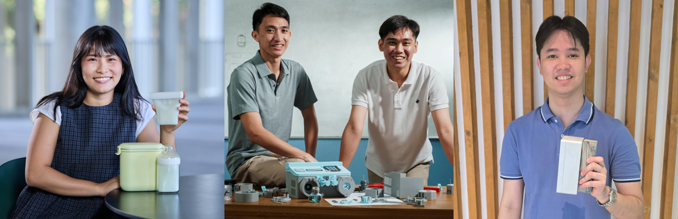
Three student-led inventions from Southeast Asia have earned places in the 2026 James Dyson Award Global Top 20, highlighting the region’s growing contribution to engineering and practical problem-solving.
The shortlisted projects are Singapore’s mömigo, a portable breastmilk storage and feeding system, alongside two inventions from the Philippines: BiDaKidney, a low-cost semi-automated dialysis machine, and Sentinel, a sensor designed to detect structural damage within concrete.
Selected by a panel of 12 Dyson engineers from the UK, US, Singapore, Malaysia and the Philippines, the 20 finalists will now proceed to the final judging stage. Sir James Dyson will select the global winners, who will be announced on 4 November 2026. Each winner will receive RM162,999 in prize money to help develop their invention further.
Three Inventions Tackling Real-World Challenges

mömigo: Simplifying Breastmilk Feeding on the Go
Developed by Nicolette Wong from the National University of Singapore, mömigo is a reusable silicone system that combines breastmilk storage, warming and feeding in one container.
The design allows parents to store expressed milk, connect the container to a warming system and attach a teat for feeding without repeatedly transferring milk between separate containers. Its compact, portable design aims to reduce the equipment parents need to carry and clean while travelling.
BiDaKidney: Making Dialysis More Accessible
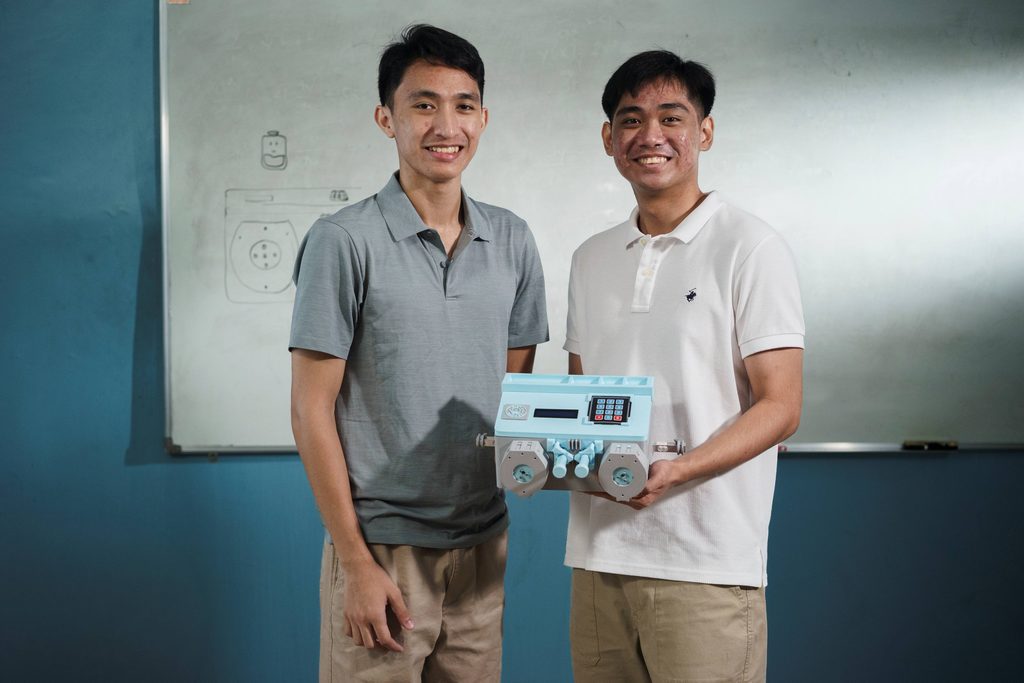
Created by Andrew Jacob Buensalido and Allyson Cabrestante from the University of the Philippines Diliman, BiDaKidney is a compact device designed to automate the movement of dialysis fluid during peritoneal dialysis while monitoring the amount delivered.
The team aims to make automated treatment more affordable by designing the machine to work with widely available dialysis sets. While commercial automated peritoneal dialysis machines can cost RM40,850 or more, BiDaKidney has a target cost of approximately RM410. The proposed design could offer a lower-cost alternative, although further development and validation would be needed before it could be used in clinical settings.
Sentinel: Detecting Hidden Structural Damage
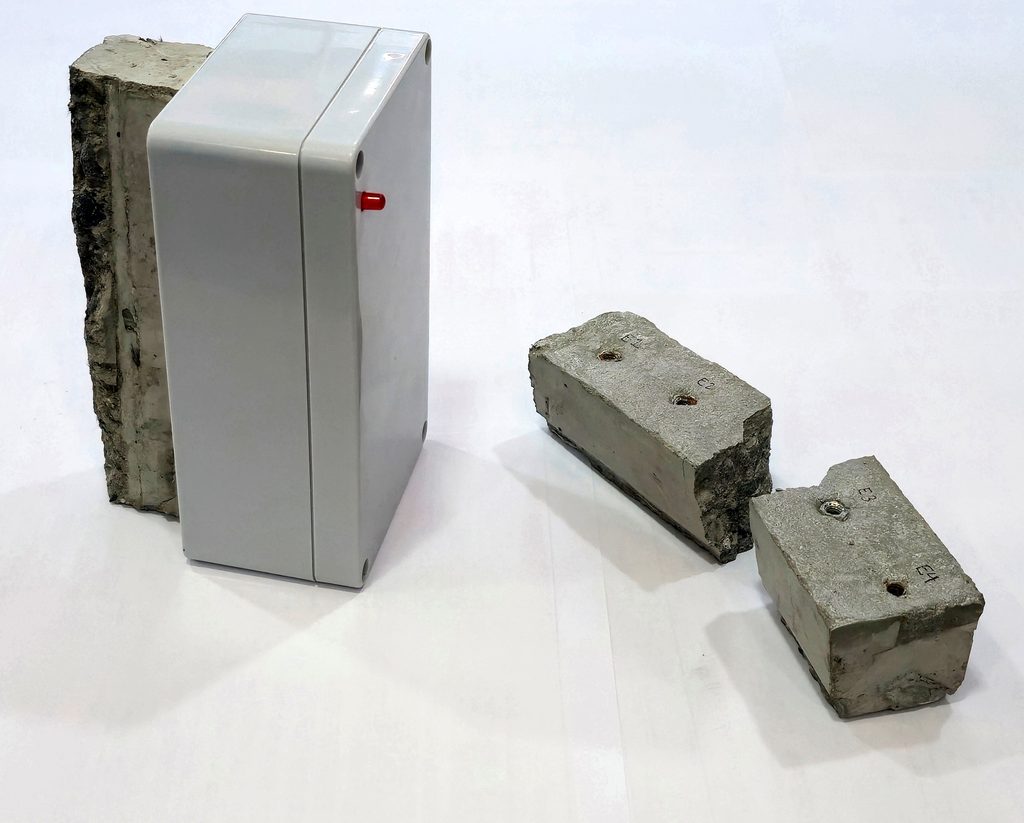
Developed by Aldrei Ong from De La Salle University–Manila, Sentinel integrates sensing technology into a concrete spacer block commonly used during construction.
Made from self-sensing concrete, the device detects changes in electrical resistance that may indicate cracks or internal damage, then transmits information wirelessly for monitoring. By incorporating the technology into an existing construction component, Sentinel aims to make structural health monitoring more practical and scalable. Each block is estimated to cost around RM0.60 to manufacture.
The invention could be particularly useful in areas where earthquakes pose a risk, helping identify damage that may not be immediately visible after a seismic event.
Celebrating the Next Generation of Innovators
Now in its 21st year, the James Dyson Award recognises emerging engineers and designers who develop solutions to real-world problems. This year’s Global Top 20 spans healthcare, accessibility, sustainability and infrastructure safety.
Other shortlisted projects include AI-powered navigation assistance for blind people, a voice-controlled Braille printer, a recycled coral reef restoration base and a wearable communication device for non-verbal children.
According to Kay Yeong, Principal Engineer and one of the Top 20 judges, the strongest entries are often those that reveal overlooked problems and turn them into practical solutions through thoughtful engineering.
The James Dyson Award is run by the James Dyson Foundation, Sir James Dyson’s engineering-education charity. Since its launch, the competition has supported more than 400 problem-solving inventions, awarding over RM8.18 million in prize money across 28 countries and regions.
The 2026 global winners will be announced on 4 November 2026, with each winner receiving RM162,999 to support the next stage of their invention.